
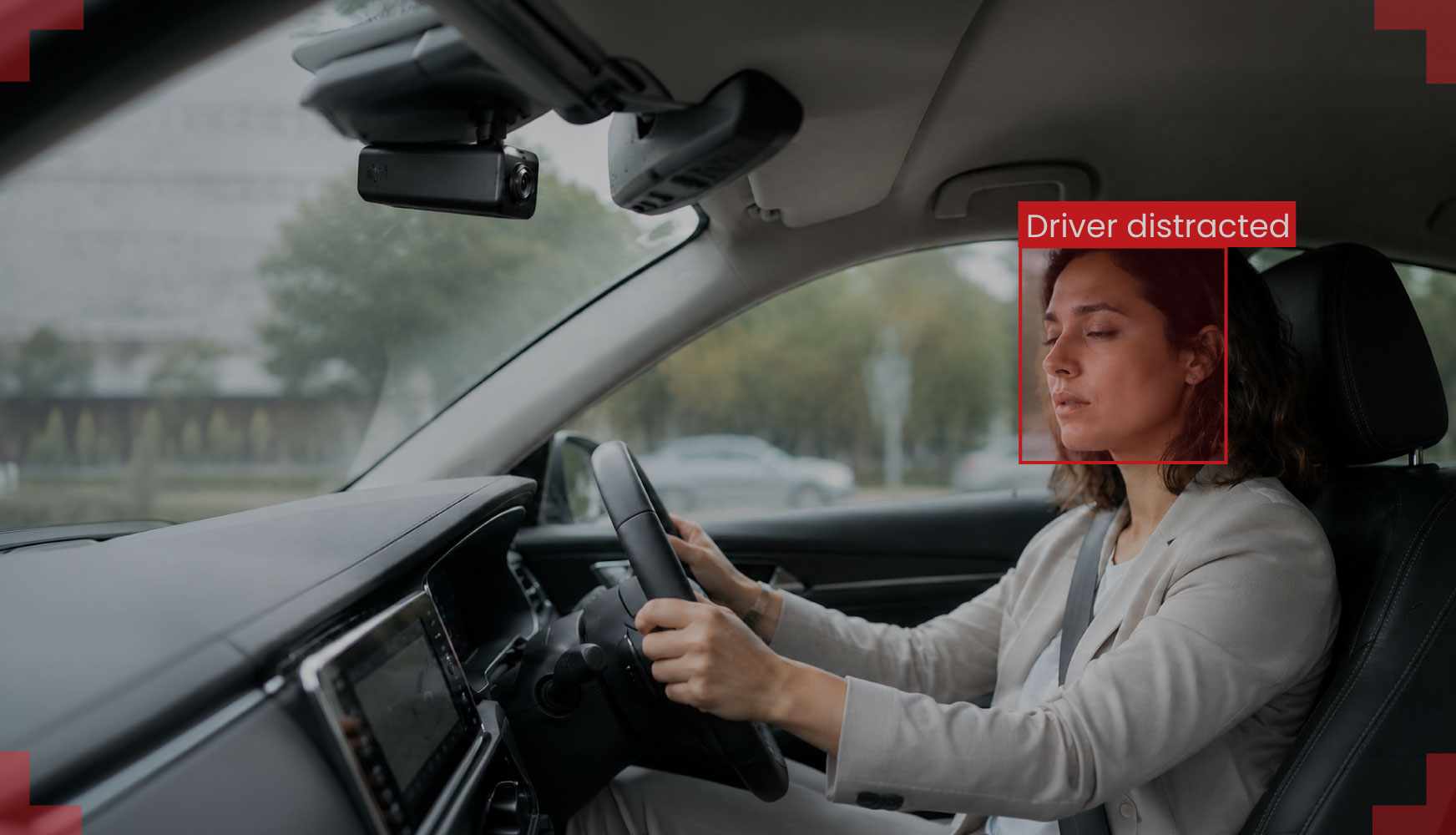
AI-Based Driver Monitoring System for Distraction and Fatigue Detection
Generate a quick summary


Driver behavior has become a core determinant of safety, compliance, and operational risk across automotive and transportation ecosystems. Even with advancements in Advanced Driver Assistance Systems ADAS and vehicle automation, human drivers continue to influence real world safety outcomes.
Two risk factors consistently dominate incident patterns driver distraction and driver fatigue. Traditional vehicle telemetry systems track motion-based signals such as speed, braking, and lane deviation. However, they fail to capture driver intent, attention, or cognitive state.
AI Based driver monitoring system powered by Computer Vision introduces real time visibility into driver behavior. ImageVision.ai converts in cabin video streams into actionable insights, enabling proactive safety decisions across vehicles and transport networks.
The Importance of Driver Behavior in Mobility
Driver behavior directly impacts safety outcomes across automotive systems and transportation networks. It is a key input in driver behavior analytics and road safety intelligence across the industry.
Accident Rates
According to the National Highway Traffic Safety Administration NHTSA, distracted driving claimed 3,208 lives in 2024. This highlights how attention loss remains a critical safety challenge across automotive and transportation ecosystems.
The Growing Importance of In-Cabin Intelligence
Modern mobility systems require continuous visibility into driver state through in cabin monitoring system for vehicles capabilities that go beyond traditional sensors.
Driver distraction occurs when attention shifts away from driving due to visual, manual, or cognitive engagement with secondary tasks. Even brief lapses can create high risk situations in dynamic traffic environments.
Driver fatigue is a progressive condition that reduces alertness, slows reaction time, and impacts decision making. It often develops gradually without obvious awareness, increasing risk in long duration driving scenarios.
Traditional sensor systems cannot reliably detect these conditions, reinforcing the need for driver monitoring system using vision AI approaches.
Computer Vision as the Foundation of Driver Monitoring
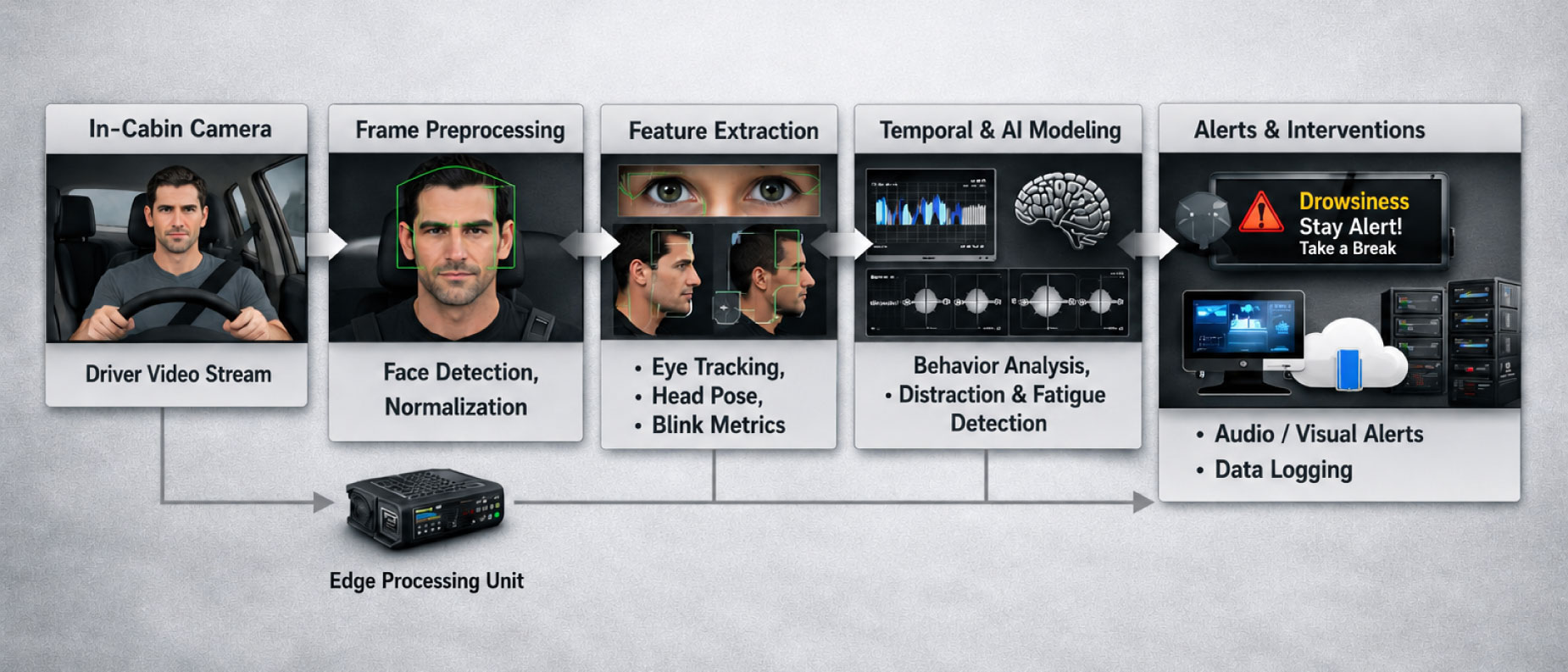
AI powered Driver Monitoring Systems analyze real time in cabin video feeds to interpret driver behavior.
Key signals include gaze direction, blink rate, head orientation, facial movement, and hand interaction patterns.
Deep Learning models trained on diverse datasets ensure consistent performance across lighting variations, driver profiles, and operating environments. This enables real time driver monitoring with accurate behavioral interpretation.
Detection of Driver Distraction with Vision AI
Driver distraction detection identifies behavioral deviations that indicate reduced driving focus inside the cabin environment.
- Mobile Device Usage: Detected through combined gaze tracking and hand interaction analysis to identify active phone engagement.
- Eyes Off Road Events: Distinguishes normal visual scanning from prolonged disengagement from the driving path.
- Head Orientation Tracking: Identifies repeated diversion toward non driving zones such as side windows, passengers, or in cabin systems.
- Infotainment Interaction: Monitors extended interaction with vehicle displays against defined safety thresholds.
- Secondary Task Engagement: Detects activities such as eating, drinking, or object handling that reduce driving attention consistency.
Detection of Driver Fatigue with Vision AI
Fatigue detection relies on continuous behavioral pattern analysis rather than isolated signals, enabling more reliable risk prediction in real time systems. Fatigue detection is a core capability of a driver fatigue monitoring system used in real time mobility safety applications.
- PERCLOS Monitoring: Measures prolonged eye closure linked to reduced alertness levels.
- Blink Rate Irregularities: Identifies deviations from normal blinking patterns indicating cognitive slowdown.
- Head Nodding Detection: Signals micro sleep events and early-stage fatigue conditions.
- Yawning Frequency Analysis: Reflects progressive fatigue accumulation over extended driving periods.
- Combined Behavioral Degradation: Multiple signal weakening patterns together improve accuracy in AI Based Driver Monitoring System deployments across transport environments.
Integration into Automotive and Transportation Ecosystems
Driver Monitoring Systems operate as cross ecosystem safety intelligence layers spanning automotive OEM platforms and transportation networks.
1. Automotive Systems
In cabin intelligence strengthens ADAS driver monitoring capabilities and enhances overall vehicle safety architecture through real time driver state awareness.
2. Transportation Systems
Operators gain continuous visibility into driver behavior across routes, improving safety compliance, operational control, and incident prevention.
3. Connected Mobility Networks
Aggregated behavioral insights support risk assessment models and predictive safety optimization across fleets and transport ecosystems.
4. Edge Based Deployment
Real time processing is enabled without dependence on continuous connectivity, allowing scalable deployment across large transport infrastructures.
Conclusion
Driver distraction and driver fatigue remain critical challenges across automotive and transportation ecosystems. Addressing them requires real time visibility into driver behavior rather than reliance on vehicle movement data alone.
AI Based Driver Monitoring System powered by Computer Vision enables this shift by transforming in cabin video into actionable intelligence.
ImageVision.ai supports OEMs and transportation operators in building safer, more intelligent mobility systems through advanced driver behavior monitoring. Contact Us