

Visual Inspection for Quality Assurance in Medical Device Manufacturing
Generate a quick summary


Medical device manufacturing depends on consistency. Each device moving through production is expected to meet the same quality standards.
Visual inspection for quality assurance remains one of the main checkpoints where defects are identified before moving further along the line. It plays a direct role in ensuring that quality requirements are met across the manufacturing process.
At lower volumes, manual inspection can maintain acceptable consistency. As production increases and device designs become more detailed, variation starts to show. Differences in inspection outcomes become more noticeable across operators and shifts.
This is one of the reasons manufacturers adopt quality inspection with vision systems. The goal is not to replace inspection, but to make it consistent.
Visual Inspection for Quality Assurance Across Production
Inspection in medical device manufacturing takes place across multiple stages. Devices and components are checked at different points to identify defects as early as possible.
Common issues include scratches, cracks, dents, contamination, and assembly inconsistencies. These checks are routine, but the results are not always uniform.
Manual inspection relies on observation, and observation varies. Operator judgment, fatigue, and environmental conditions all influence how defects are identified.
As production expands, these differences become more visible. The process stays the same, but the outcomes begin to shift.
At that stage, maintaining consistency across production becomes the main concern.
Quality Inspection with Vision Systems in Medical Device Manufacturing
To address this, manufacturers implement quality inspection with vision systems.
These systems evaluate each device using controlled imaging and predefined criteria. Every device is assessed in the same way, under the same conditions.
With defect detection in manufacturing using vision systems, inspection becomes repeatable rather than interpretive. The same type of defect is identified consistently, regardless of where it appears in production.
This helps reduce variation and stabilizes inspection outcomes across lines and shifts.
Visual Defect Detection Using Computer Vision
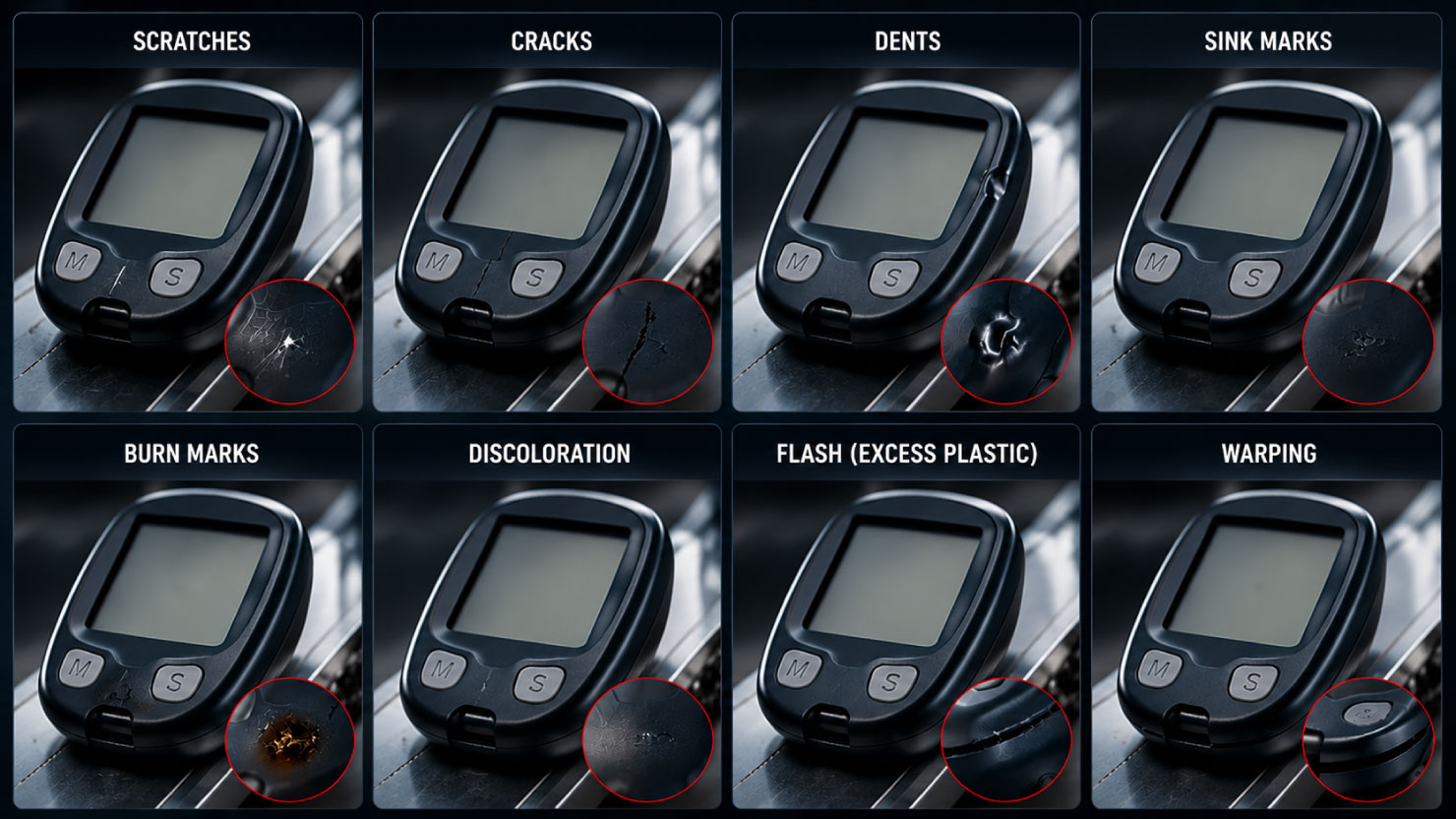
The use of visual defect detection using Computer Vision extends what inspection can reliably capture.
Instead of focusing only on obvious defects, Computer Vision evaluates finer details such as surface texture, edges, alignment, and patterns.
Computer Vision in medical device manufacturing is important for devices such as glucometers, insulin pens, and insulin pumps, where minor defects need to be identified consistently.
Small variations in surface or structure can affect quality expectations. Computer Vision helps identify these variations in a more uniform way and reduces differences in how defects are interpreted.
Benefits of Vision-Based Quality Inspection
When inspection becomes consistent, the overall process stabilizes.
Variation in inspection results is reduced. Devices are evaluated more uniformly across production, regardless of shift or volume.
Inspection can continue at production speed without slowing operations. At the same time, inspection data provides better visibility into where defects occur and how often they appear.
This makes it easier to understand defect patterns and address them earlier in the process.
Earlier detection helps reduce rework, limit waste, and avoid unnecessary process loops.
Conclusion
Consistency in inspection is essential in medical device manufacturing.
Visual inspection for quality assurance remains central to defect identification, but maintaining consistency through manual methods becomes more difficult as production increases.
Combining quality inspection with vision systems and visual defect detection using Computer Vision, inspection outcomes become more reliable and repeatable.
As manufacturing scales, defect detection in manufacturing using vision systems helps maintain consistent quality across all stages of production.
Contact now to explore how vision-based inspection can support consistent defect detection and quality control in medical device manufacturing.