
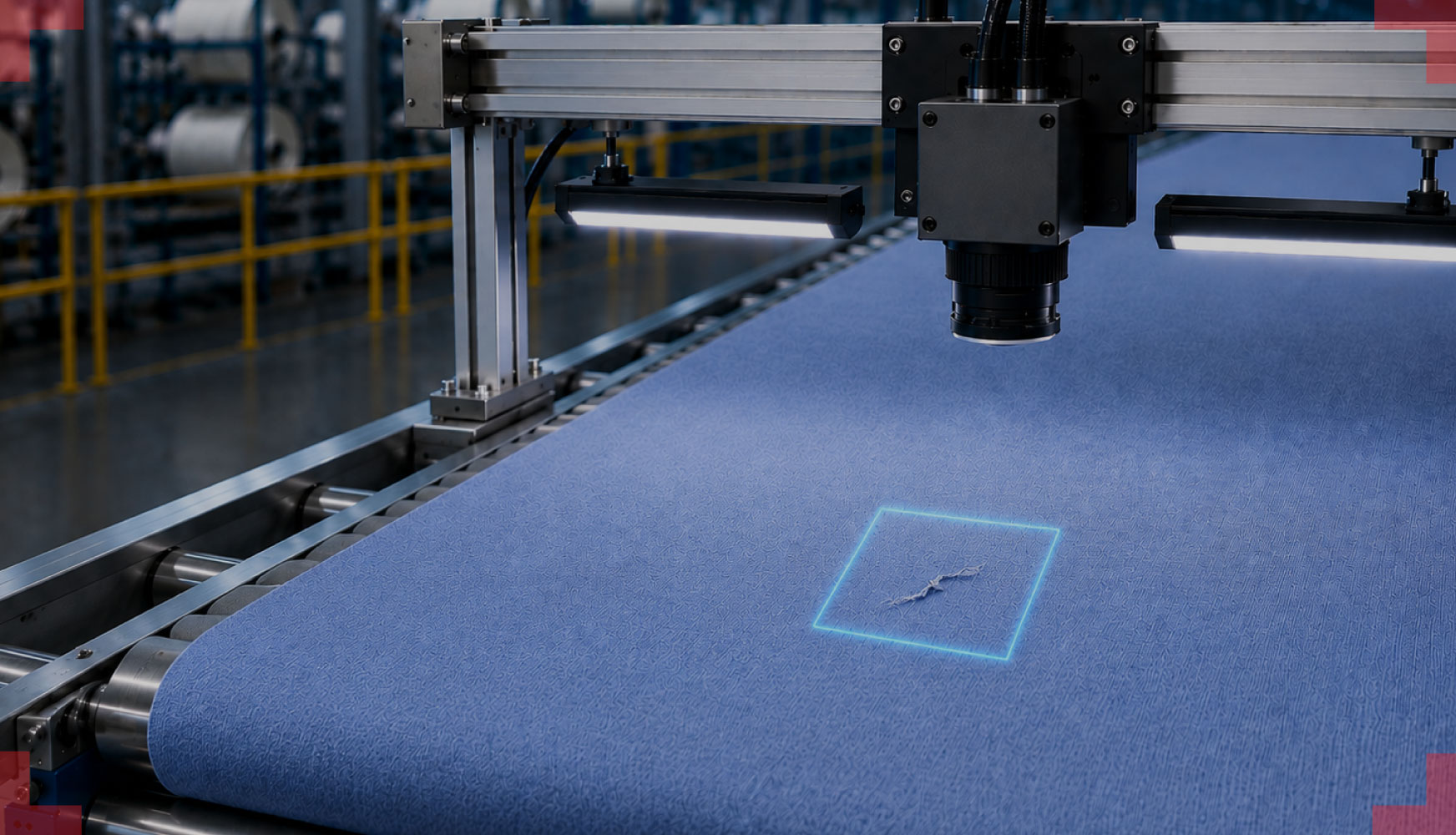
Fabric Inspection with Vision AI: AI-Powered Textile Quality Control
Generate a quick summary


Fabric inspection is a critical quality control point in textile manufacturing. Defects that continue into dyeing, finishing, cutting, or shipment can increase rework, material loss, delivery risk, and customer claims. Inspection performance can vary when production speeds, fabric patterns, and multiple shifts depend primarily on manual review.
Fabric Inspection with Vision AI provides continuous visibility into surface quality during production. It detects visible defects, records their location, and connects results with quality workflows. For plant managers, quality leaders, and operations teams, the objective is to identify defects earlier, standardize textile quality control, and act before issues move downstream.
Why Fabric Inspection is a Business Priority
Fabric defects can consume production capacity, increase working capital requirements, delay customer orders, and weaken margins. Leadership teams therefore need consistent inspection standards, traceable quality records, defined decision ownership, and visibility across production lines and facilities. The executive priority is to understand where defects originate, how they affect manufacturing performance, and whether corrective actions prevent recurrence.
What is Fabric Inspection with Vision AI
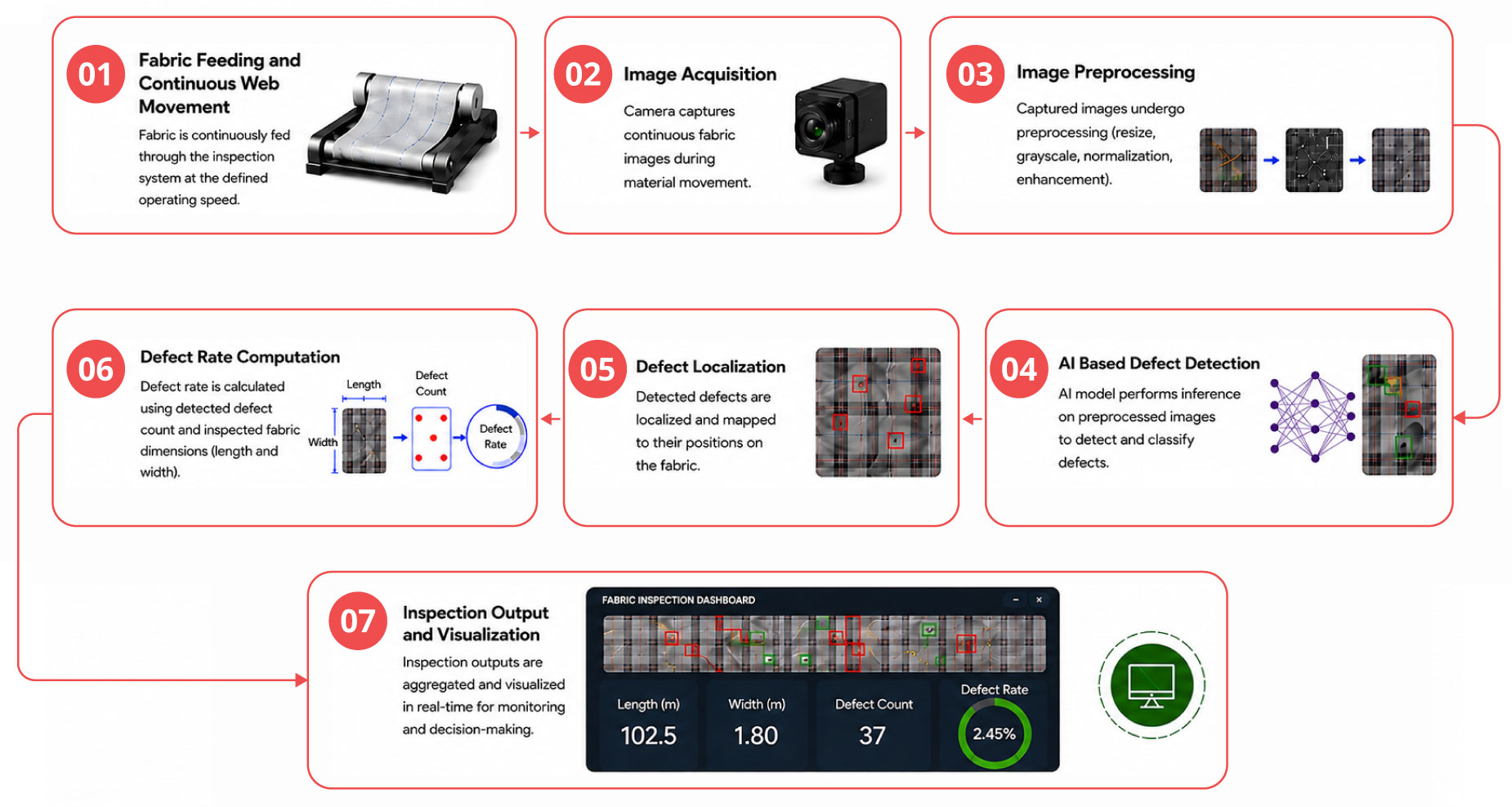
Textile Quality Control using Vision AI combines industrial imaging, computer vision models, and plant-specific inspection rules. The system analyzes fabric images, identifies trained defect categories, marks the affected location, and records each event against the relevant roll, batch, machine, shift, or product style.
It supports continuous visual inspection. Physical characteristics such as tensile strength, colorfastness, composition, and chemical compliance still require the appropriate laboratory or process tests. ASTM D5430 defines methods for visually inspecting and grading fabrics. Vision AI can apply approved grading rules while preserving visual evidence for review.
How Fabric Inspection with Vision AI Works
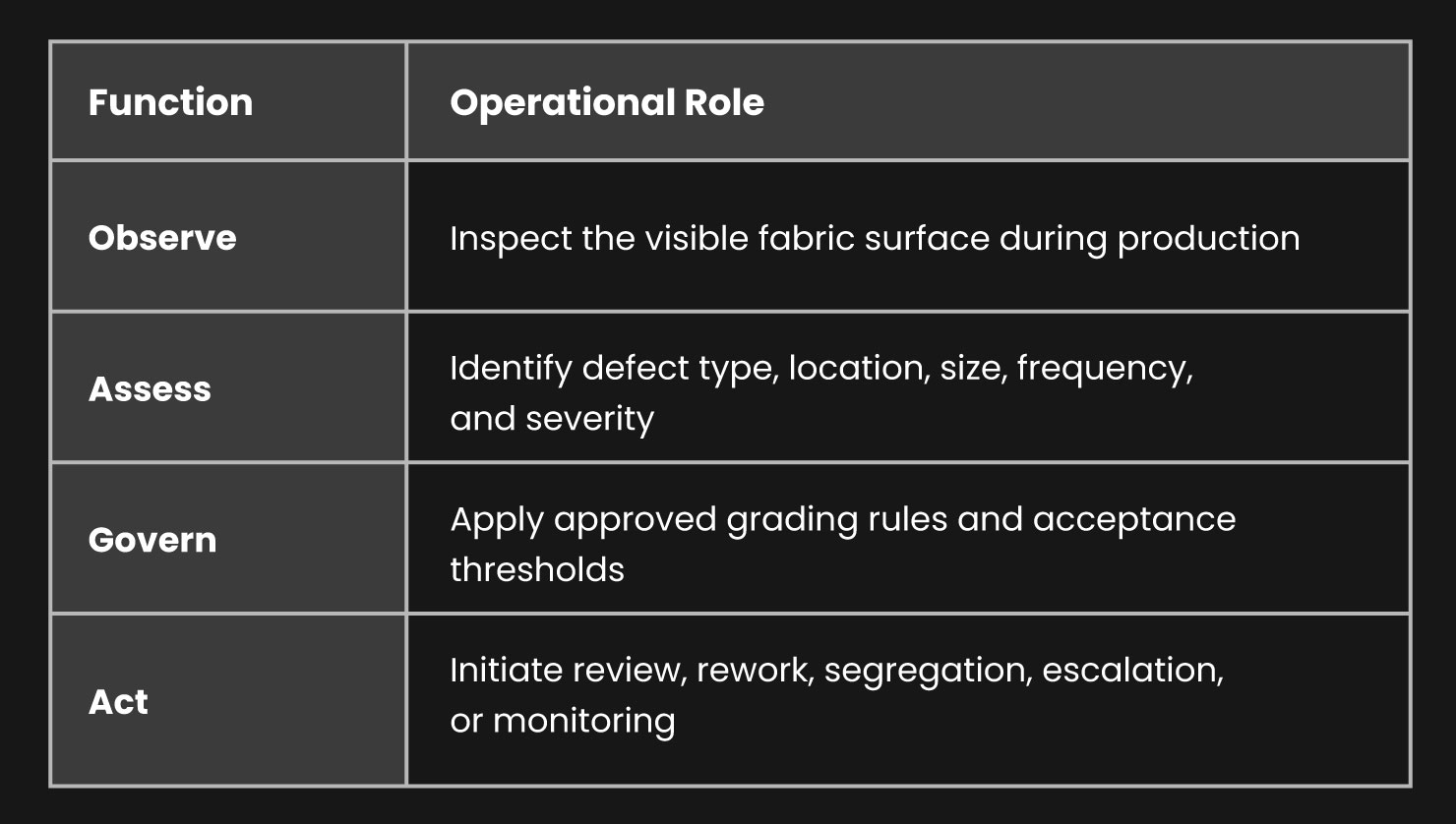
Fabric Defect Detection using Computer Vision connects visual inspection with operational response.
This structure gives quality and production teams a shared record of the event, the decision, and the resulting action.
Fabric Defects Detected During Textile Production
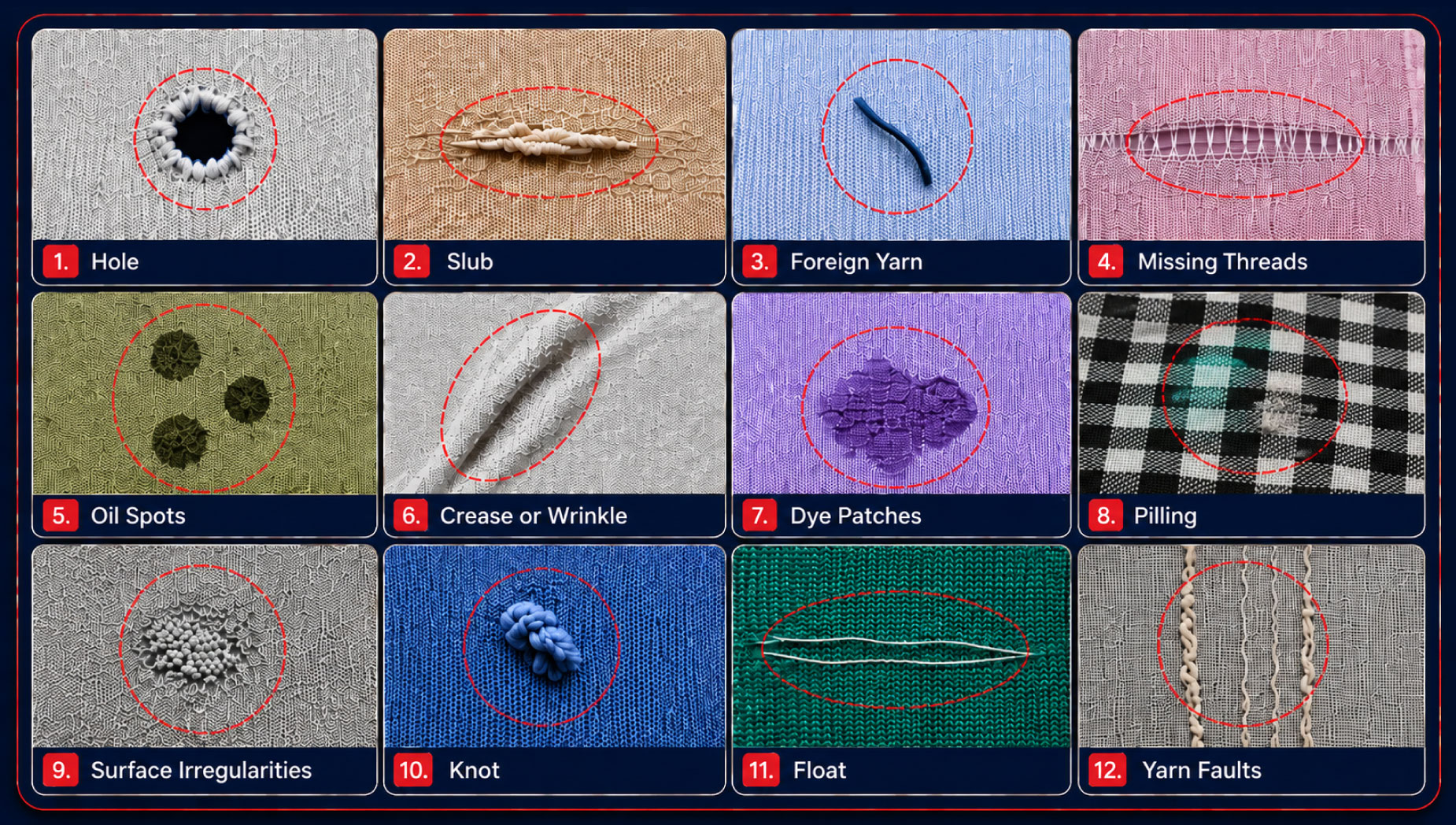
Fabric Quality Inspection with Vision AI can identify visible defects represented in approved training data. These may include holes, slubs, foreign yarn, missing threads, oil spots, stains, dye patches, broken patterns, and surface irregularities.
Inspection performance depends on fabric type, texture, color, pattern, defect size, image quality, lighting, and production speed. The inspection scope must therefore be validated against actual manufacturing conditions.
How Should Manufacturers Measure Business Value
The business case should connect inspection performance with operating and financial measures.
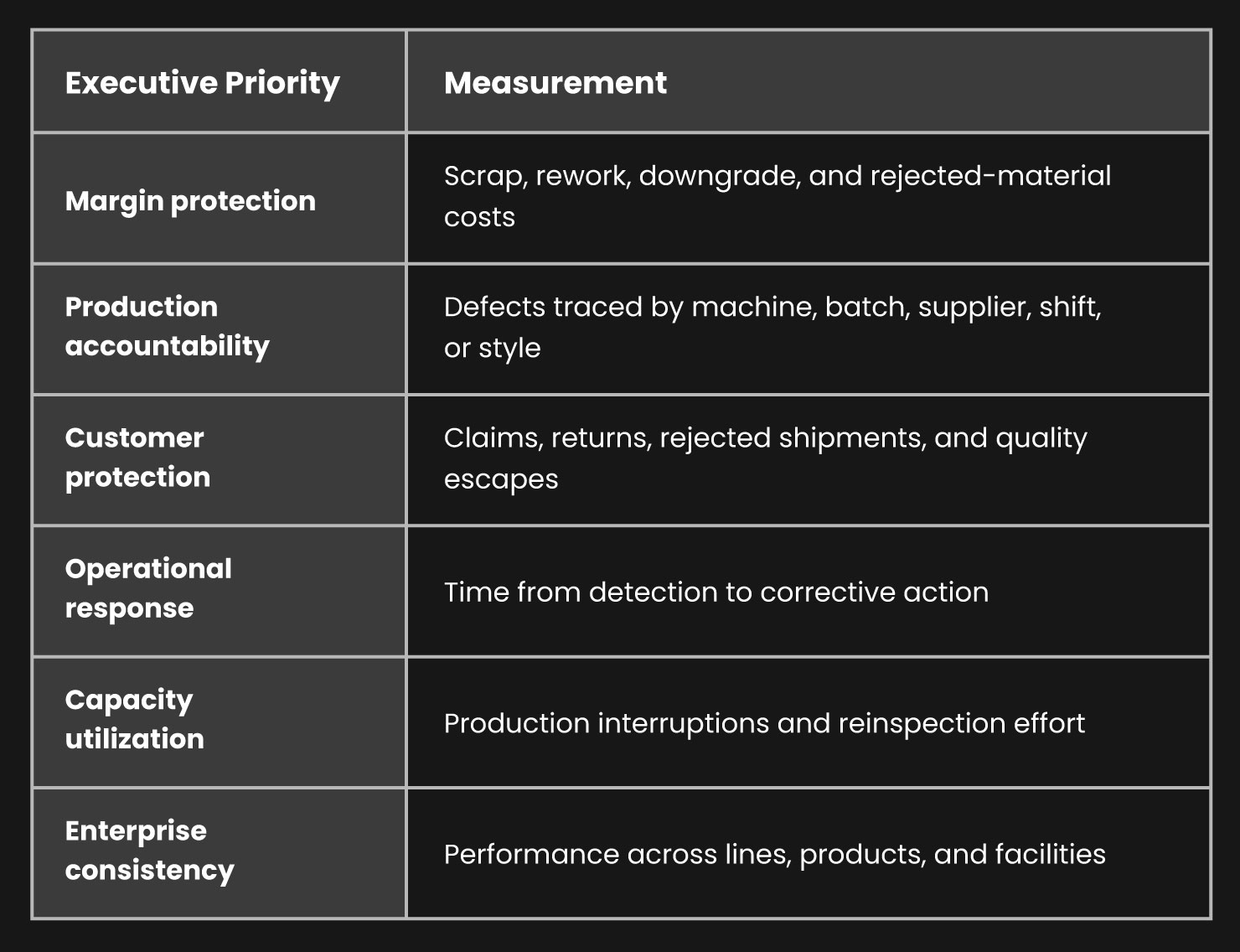
These measures establish the operating baseline and support an evidence-based investment decision.
Coordinating Corrective Action with Agentic AI
Vision AI identifies and classifies the visual event. Agentic AI can apply operating rules, prioritize the event, assign responsibility, initiate a review task, escalate unresolved cases, and prepare batch or shift summaries.
Human approval remains part of product-release decisions, customer-specific requirements, and manufacturing process changes. This creates a controlled path from detection to ownership and resolution.
What Textile Manufacturers Should Validate Before Deployment
Computer Vision for Textile Manufacturing should begin with a defined business problem and a representative production environment.
Leadership teams should evaluate five areas.
- Business case: Define the current financial and operational exposure created by visible fabric defects.
- Governance: Establish defect categories, acceptance rules, escalation procedures, and decision ownership.
- Production readiness: Validate performance across relevant fabrics, line speeds, shifts, and operating conditions.
- Integration: Connect approved events with quality management systems, manufacturing execution systems, dashboards, reporting tools, and operational workflows.
- Enterprise expansion: Confirm that inspection standards, responsibilities, and performance measures can remain consistent across additional lines and facilities.
Recent research on real-time fabric defect detection shows continued progress in YOLOv8-based methods. Production decisions, however, should depend on validated plant performance rather than a research benchmark alone.
How ImageVision.ai Supports Fabric Quality Assurance
ImageVision.ai is an Enterprise Vision AI provider. Its approach connects industrial imaging, edge deployment, defect detection, quality workflows, and Agentic AI to support manufacturing decisions. Relevant capabilities include Vision AI quality verification and manufacturing defect detection. ImageVision.ai maintains ISO/IEC 27001:2022 and ISO 9001:2015 management systems across its technology delivery scope.
Advancing Quality Control Across Textile Operations
Fabric Inspection with Vision AI gives manufacturing leaders a governed approach to visual quality inspection. The investment should be assessed through validated production performance, clear ownership, connected workflows, and financial impact.
Talk to Our Vision AI Expert to evaluate the operating conditions, governance requirements, integration priorities, and business case for your fabric inspection program.