
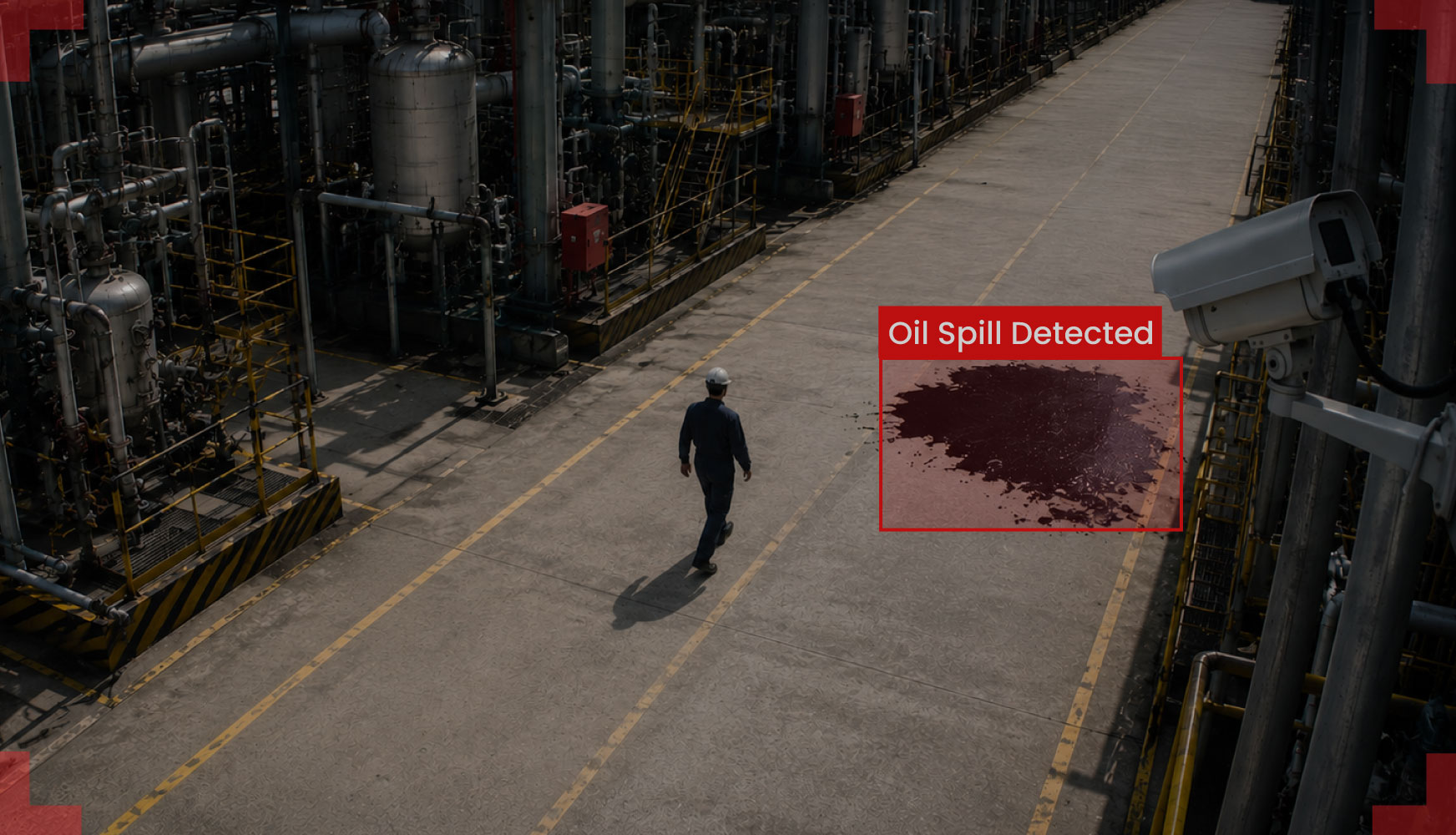
Oil Spill Detection Using Visual AI for Industrial Safety Operations
Generate a quick summary


Oil spills are a serious business risk across industrial sites. A leak at a refinery, factory, warehouse, port, tank farm, pipeline, loading area, or maintenance zone can become a larger incident if teams do not catch it early.
The real problem is the detection gap. Between the moment a leak starts and the moment someone notices it, oil can spread into work areas, equipment zones, drains, and walkways. That delay increases cleanup work, worker exposure, downtime risk, and compliance pressure.
This is why oil spill detection using Visual AI is becoming a practical layer of industrial risk management.
The Cost of Delayed Spill Detection
A delayed response can turn a minor leak into a site-wide problem.
Oil can move across high-traffic areas, reach drainage points, affect equipment, or enter sensitive zones. As the spill spreads, teams need more time, labor, and resources to contain it.
According to OSHA, oil spill incidents can expose workers to flammable atmospheres, toxic compounds, hydrogen sulfide, and physical hazards such as slips, trips, and falls.
For industrial operators, early visibility directly supports safety, uptime, cleanup control, and compliance readiness.
The longer a spill remains unnoticed, the harder it becomes to contain.
Why Traditional Leak Detection Leaves Gaps
Most facilities use pressure sensors, flow monitors, inspections, and patrols to identify leaks.
These methods are useful, but they do not always show visible spill activity fast enough.
Pressure sensors track system changes. They may not detect oil spreading on the floor. Manual inspections depend on timing and staff availability. Patrols and drone checks only show conditions during the inspection window.
As a result, small leaks can spread before response teams know there is a problem.
The challenge is not adding more tools. The challenge is to improve oil leak detection fast enough to prevent escalation.
How Operators Can Reduce Spill Response Time using Visual Intelligence
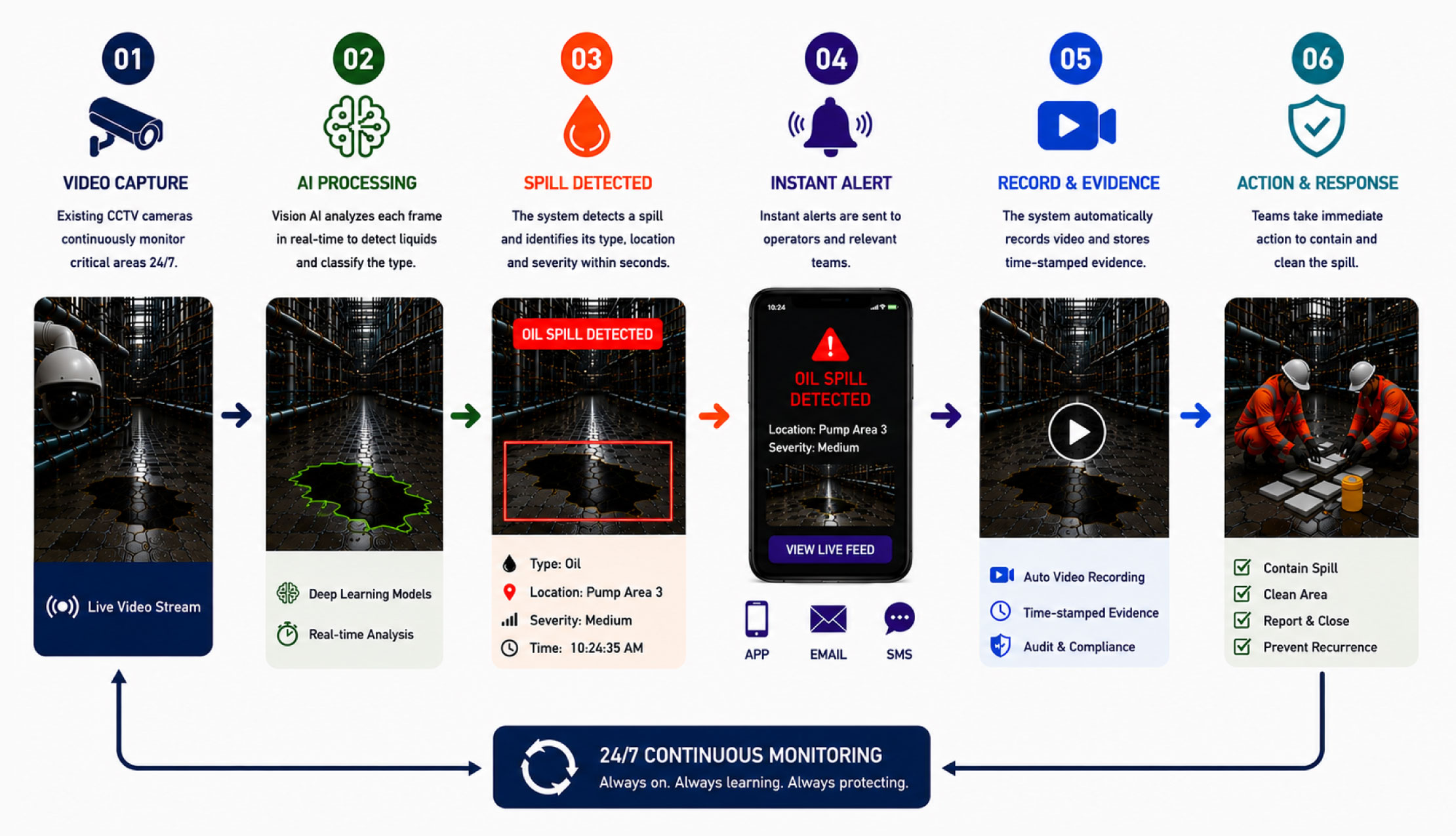
Oil spill detection using industrial Visual AI closes this visibility gap through continuous visual monitoring.
Using existing cameras, the system detects visible signs of liquid pooling, dripping, leaking, or spreading. When it identifies a possible spill, it alerts operations, maintenance, or safety teams in near real time.
This gives teams earlier awareness and faster response.
Instead of waiting for a pressure change, inspection round, or worker report, teams can act before the spill expands.
Business Impact of Oil Spill Detection Using Visual Intelligence
The value of oil spill detection using Visual Intelligence is measured by the risk it helps reduce.
For operations leaders, the key outcomes are clear.
- Faster Spill Detection: Teams identify leaks earlier, before they spread across larger areas.
- Faster Response Time: Alerts help the right teams investigate and contain the issue sooner.
- Reduced Spill Spread: Early action limits oil movement into walkways, drains, equipment zones, and production areas.
- Lower Cleanup Effort: Contained spills require less labor, material, and recovery time.
- Reduced Downtime Risk: Fast intervention helps avoid spill-related disruption to production and site activity.
- Better Compliance Documentation: Visual records support audits, incident reviews, investigations, and reporting.
Conclusion
Traditional monitoring methods still matter, but they can leave gaps that slow down response.
Oil Spill Detection using Visual AI helps industrial teams detect leaks earlier, act faster, and limit spill impact before it affects safety, cleanup, compliance, or uptime.
The goal is not just to find spills. It is to reduce risk before a small leak becomes a larger business problem.
Contact us to see how Visual AI can help your teams detect oil leaks earlier, respond faster, and reduce spill-related risk across your industrial sites.