
Enterprise Vision AI for Operational Decision Intelligence
- Vathslya Yedidi
- August 27, 2026
Generate a quick summary


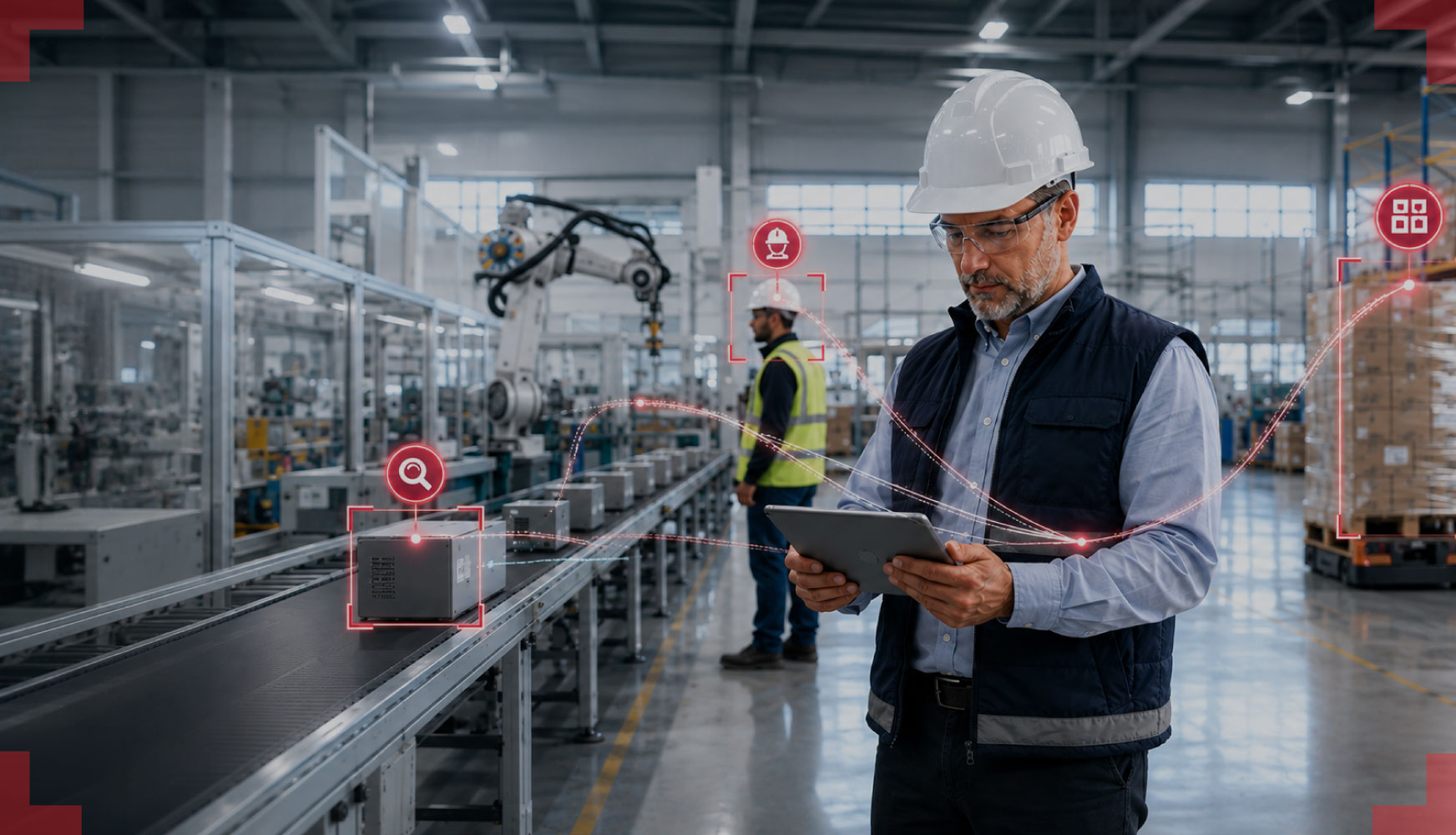
Enterprise Vision AI can identify defects, safety conditions, inventory movements, vehicles, equipment states, process deviations, and other events across physical operations.
Detection must be connected with operational systems and response procedures to deliver business value.
A Vision AI alert that requires an operator to collect information, determine ownership, locate the correct procedure, and coordinate follow-up leaves a significant part of the decision process manual.
For CIOs, COOs, operations leaders, and plant teams, the priority is not generating additional alerts. The priority is establishing a controlled process from visual event to operational decision.
Vision AI Alerts Need Operational Information
Vision AI establishes what has occurred within an image or video stream. An operational decision requires additional information from the systems and processes managing the activity.
A manufacturing system may identify a surface defect. Before deciding whether the item should be rejected, reviewed, or released, the quality team may also need the product ID, batch number, production line, inspection criteria, and previous findings.
A safety application may identify missing PPE. The required response depends on the work area, employee activity, operating policy, event severity, and escalation procedure.
The same requirement applies in logistics. Detecting a pallet, vehicle, package, or inventory movement has limited value unless the event is associated with the correct order, dock, shipment, warehouse process, or exception.
This distinction separates an enterprise deployment from a standalone video analytics application.
Visual events must enter a defined workflow with the operational and procedural information required to support action.
Operational Intelligence Depends on Enterprise Integration
Enterprise Vision AI should connect with the systems used to manage the operation.
Depending on the environment, integrations may include MES, ERP, WMS, EHS, GIS, quality management, maintenance, incident management, transportation platforms, and existing VMS infrastructure.
A Vision AI integration model should establish five points.
- What event has Vision AI identified?
- What additional operational information is required?
- Which system or team owns the next step?
- What validation or approval is required?
- How will the decision and resulting action be recorded?
These questions should be addressed before another alerting interface is developed.
A separate dashboard may provide visibility. Integration determines whether the visual event becomes part of the operating process.
Vision AI, Edge AI, and Agentic AI Have Different Roles
An enterprise architecture requires clear responsibilities and controls for each technology.
- Vision AI: Vision AI analyzes images and video to identify objects, events, conditions, activities, and changes across physical environments.
- Edge AI: Edge AI processes data close to the camera or operating environment. It is suited to deployments where response time, bandwidth, connectivity, privacy, or data-handling requirements make local processing necessary.
- Agentic AI: Agentic AI coordinates approved activities following a validated visual event. It combines visual findings with authorized system information, operating rules, and workflow requirements.
For example, Vision AI may detect a safety event at an industrial site. Authorized systems can provide the relevant site, equipment, employee, and procedural information.
Agentic AI can organize this information, assign a priority, prepare an incident summary, retrieve the applicable procedure, recommend an escalation path, and coordinate the next workflow step for review.
This reduces the time and manual effort required to move from detection to response.
Human accountability remains necessary where a decision can affect employees, production, assets, customers, regulatory obligations, or public services.
Governance Must Extend Beyond the AI Model
Model validation is one component of Enterprise Vision AI governance.
Organizations also need controls covering
- Access to images, video, and visual events
- Operational information that AI systems are permitted to use
- Conditions requiring human verification
- Recommendations and actions permitted for AI systems
- Approval of model, rule, and workflow changes
- Recording and auditing of decisions
- Cybersecurity, privacy, and data retention
The NIST AI Risk Management Framework organizes AI risk management around Govern, Map, Measure, and Manage. In an enterprise operating environment, these functions support accountability, validation, cybersecurity, privacy, monitoring, and human oversight.
Agentic AI requires equivalent controls. Its access should be limited to approved systems, data, and workflows. Recommendations should follow established operating policies. Escalation rules should reflect the severity and operational consequence of the event. Decisions with a material impact should remain within accountable human processes.
Governance must cover the complete workflow, not only the model producing the initial alert.
Business Value Is Measured After Detection
Technical measures such as precision, recall, and false-alert rates remain necessary. They indicate whether Vision AI is performing within the required parameters.
Enterprise leadership also needs evidence that the associated workflow is improving operational performance.
In manufacturing, relevant measures may include
- Defect escapes
- Rework
- Scrap
- Inspection effort
- First-pass yield
In logistics, relevant measures may include
- Inventory accuracy
- Dwell time
- Vehicle turnaround time
- Loading accuracy
- Counting effort
For safety operations, relevant measures may include
- Incident response time
- Investigation effort
- Recurring violations
- Escalation performance
- Closure time
The appropriate KPI depends on the operating problem.
Enterprise Vision AI should be measured against the business process it is intended to improve.
These measures allow leadership to determine where further deployment is operationally and financially justified.
Operational Decision Intelligence Requires a Defined Workflow
Enterprise Vision AI programs should establish a clear sequence between observation and action.
- Visual event: Vision AI identifies a relevant object, activity, condition, or process deviation.
- Validation: The event is verified according to its risk, confidence level, and workflow requirements.
- Operational information: Authorized enterprise systems provide the information required to interpret the event.
- Decision support: Business rules, analytics, or Agentic AI help determine the event priority and required response.
- Human oversight: Responsible teams review recommendations, escalations, and actions that require accountable approval.
- Outcome recording: The decision and resulting action are recorded within the relevant operational system for reporting, analysis, and audit.
This structure keeps decision authority separate from event detection while reducing unnecessary manual coordination.
The same operating model can be applied across quality, safety, logistics, infrastructure, transportation, utilities, and other physical operations.
Building Enterprise Vision AI Around Operational Decisions
The strategic value of Enterprise Vision AI does not depend on the number of alerts presented to an operations team.
It depends on whether each relevant event reaches the correct system, team, procedure, and decision process.
Enterprise leaders should evaluate Vision AI within their existing technology and operational environment. Detection performance remains important, along with system integration, Edge AI deployment, cybersecurity, Agentic AI controls, human oversight, and measurable operating results.
ImageVision.ai works with organizations to connect Vision AI events with enterprise systems, approved workflows, governance requirements, and accountable decision processes.
Connect visual events with the systems and workflows required for operational decisions. Talk to our Vision AI expert.
Frequently Asked Questions
What is Enterprise Vision AI?
Enterprise Vision AI applies Computer Vision across business operations through managed infrastructure, system integrations, governance, and defined workflows. It enables visual events to support consistent operational processes.
How are Vision AI alerts converted into operational intelligence?
Vision AI alerts become operational intelligence when they are validated and combined with relevant operational information, workflow rules, ownership, approvals, and defined response procedures.
What role does Agentic AI play in Enterprise Vision AI?
Agentic AI uses validated visual events and authorized enterprise information to support prioritization, incident summaries, procedure retrieval, recommendations, escalation, and workflow coordination within approved permissions.
Why is human oversight required in Vision AI workflows?
Human oversight provides accountable review where AI-supported recommendations or actions may affect safety, employees, production, customers, assets, compliance, or public services.
Which enterprise systems can Vision AI integrate with?
Enterprise Vision AI can integrate with MES, ERP, WMS, EHS, GIS, quality management, maintenance, incident management, transportation platforms, and VMS infrastructure based on the operational environment.