
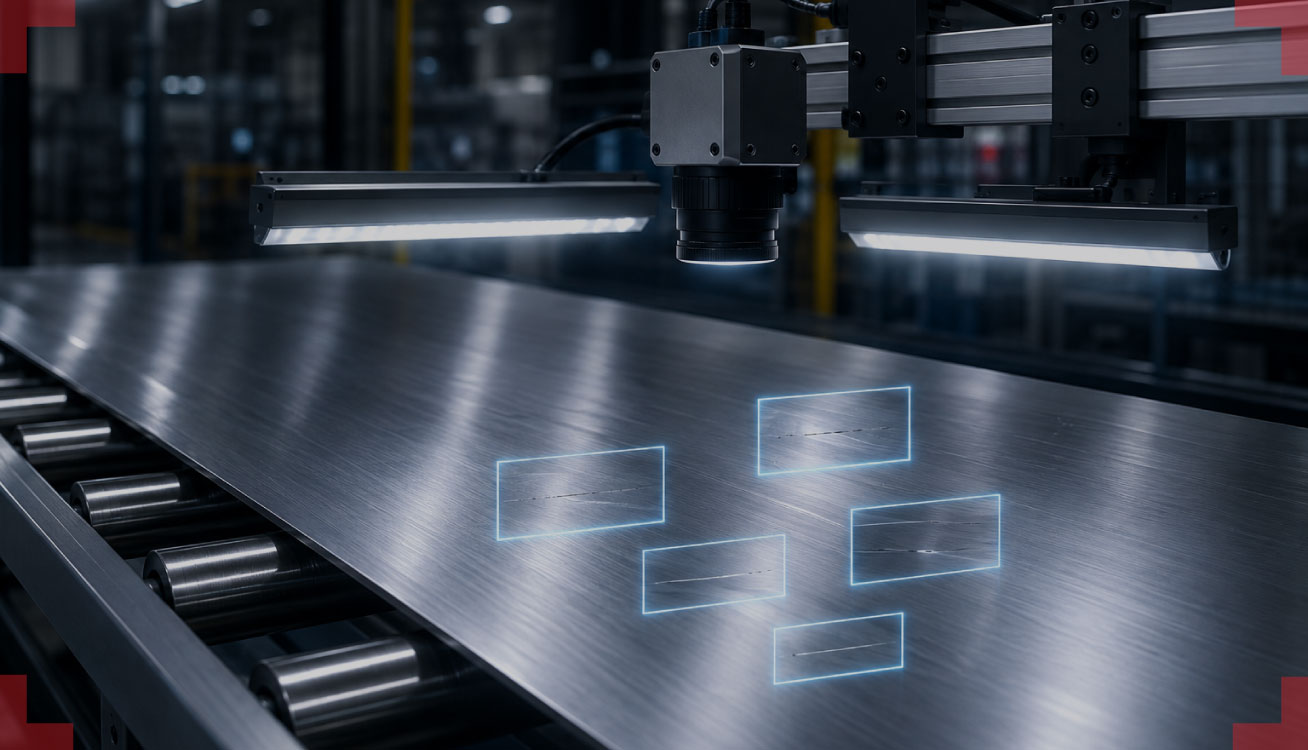
Steel Sheet Defect Detection with Visual Intelligence for Manufacturing Quality
Generate a quick summary


Steel sheet quality is a critical factor in manufacturing performance. Industries such as automotive, construction, heavy equipment, energy, shipbuilding, and industrial machinery rely on high-quality steel sheets to maintain product reliability, production efficiency, and customer satisfaction. Surface defects can result in rejected material, additional rework, production delays, and higher operating costs.
Steel sheets pass through multiple manufacturing stages, including rolling, pickling, slitting, and finishing. During these processes, visible surface and edge defects can develop. If they are not detected early, defects may continue into downstream operations where correction becomes more expensive and disruptive.
As manufacturers pursue higher quality standards and operational excellence, inspection is shifting from periodic quality checks to continuous production visibility. Industrial Visual Operations AI enables manufacturers to monitor steel sheets throughout production, helping quality teams identify manufacturing defects earlier while supporting more informed operational decisions.
Why Manufacturers Are Moving Toward Continuous Steel Sheet Inspection
Traditional quality inspection has primarily focused on checking finished products before shipment. While this approach verifies product quality, it provides limited visibility into where defects originate or how they develop during manufacturing.
Continuous Steel Sheet Defect Detection with Visual Intelligence gives manufacturers greater insight into production quality as steel sheets move through the manufacturing line. Rather than identifying problems after production is complete, manufacturers can detect defects earlier, investigate recurring quality issues, and respond before defects affect downstream processes.
Continuous inspection also supports root cause analysis by identifying recurring defect patterns across production lines, equipment, materials, and manufacturing shifts. This transforms inspection from a reactive quality activity into a valuable source of operational intelligence.
Considerations for Effective Steel Sheet Inspection
Successful steel sheet inspection depends on configuring the inspection system around actual manufacturing conditions.
Steel surfaces vary in finish, reflectivity, product type, sheet width, and production speed. Camera placement, lighting configuration, image resolution, conveyor speed, and target defect size all influence inspection performance.
For wide production lines, multiple industrial cameras are typically positioned across the sheet width to provide complete inspection coverage. Optimized lighting enhances surface visibility, allowing the inspection system to consistently identify scratches, rolled-in scale, pitted surfaces, edge defects, and other visible manufacturing defects.
When these components are properly configured, manufacturers can achieve consistent inspection performance without interrupting production.
How Industrial Visual Operations AI Improves Steel Sheet Inspection
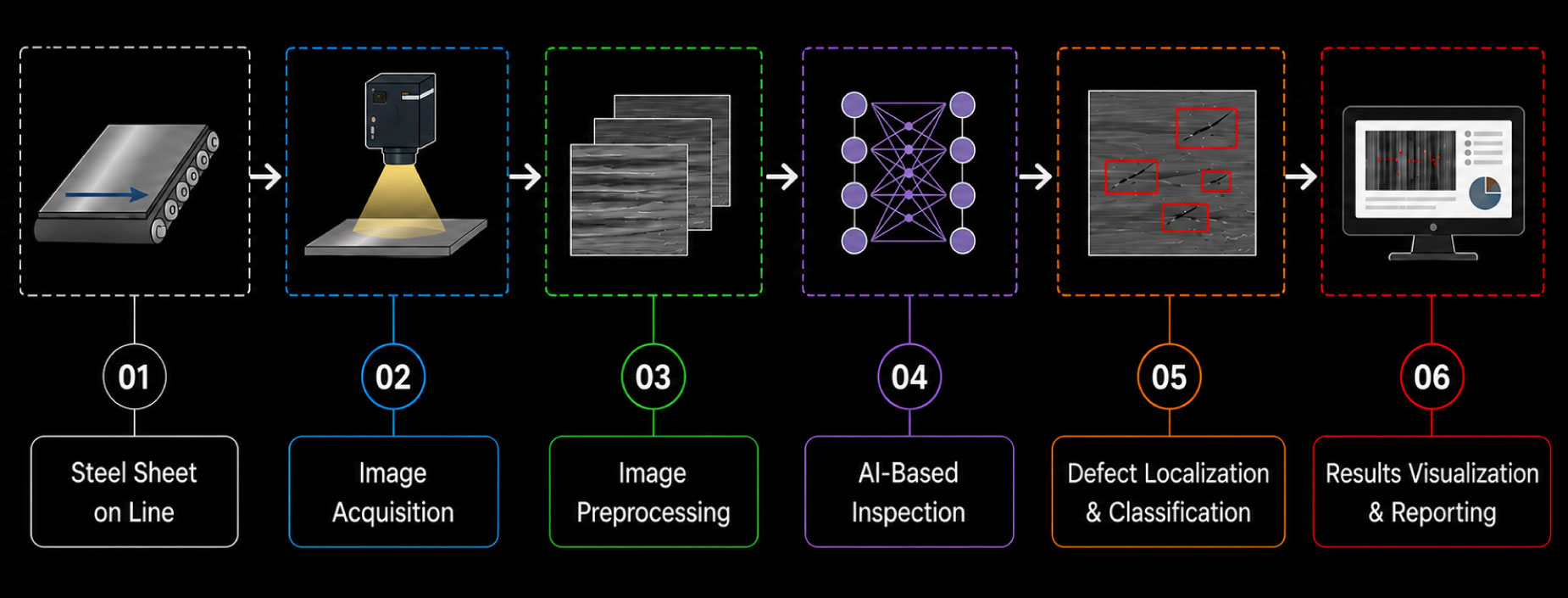
Industrial Visual Operations AI introduces continuous visual intelligence across steel manufacturing operations.
As steel sheets move through production, industrial cameras continuously capture high-resolution images of the visible surface. The inspection system analyzes every image, detects manufacturing defects, determines their location, classifies the defect type, and generates inspection insights for quality teams.
This approach enables Steel Surface Defect Detection with Computer Vision, allowing manufacturers to inspect every visible section of every steel sheet using a consistent quality standard throughout production.
For manufacturers implementing Steel Sheet Inspection with Vision AI, inspection data extends beyond quality control. It provides operational visibility into recurring defect trends, equipment performance, production consistency, and process improvement opportunities.
Common Steel Surface Defects During Manufacturing
An effective Surface Defect Inspection strategy focuses on defects that are visible and commonly generated during manufacturing.
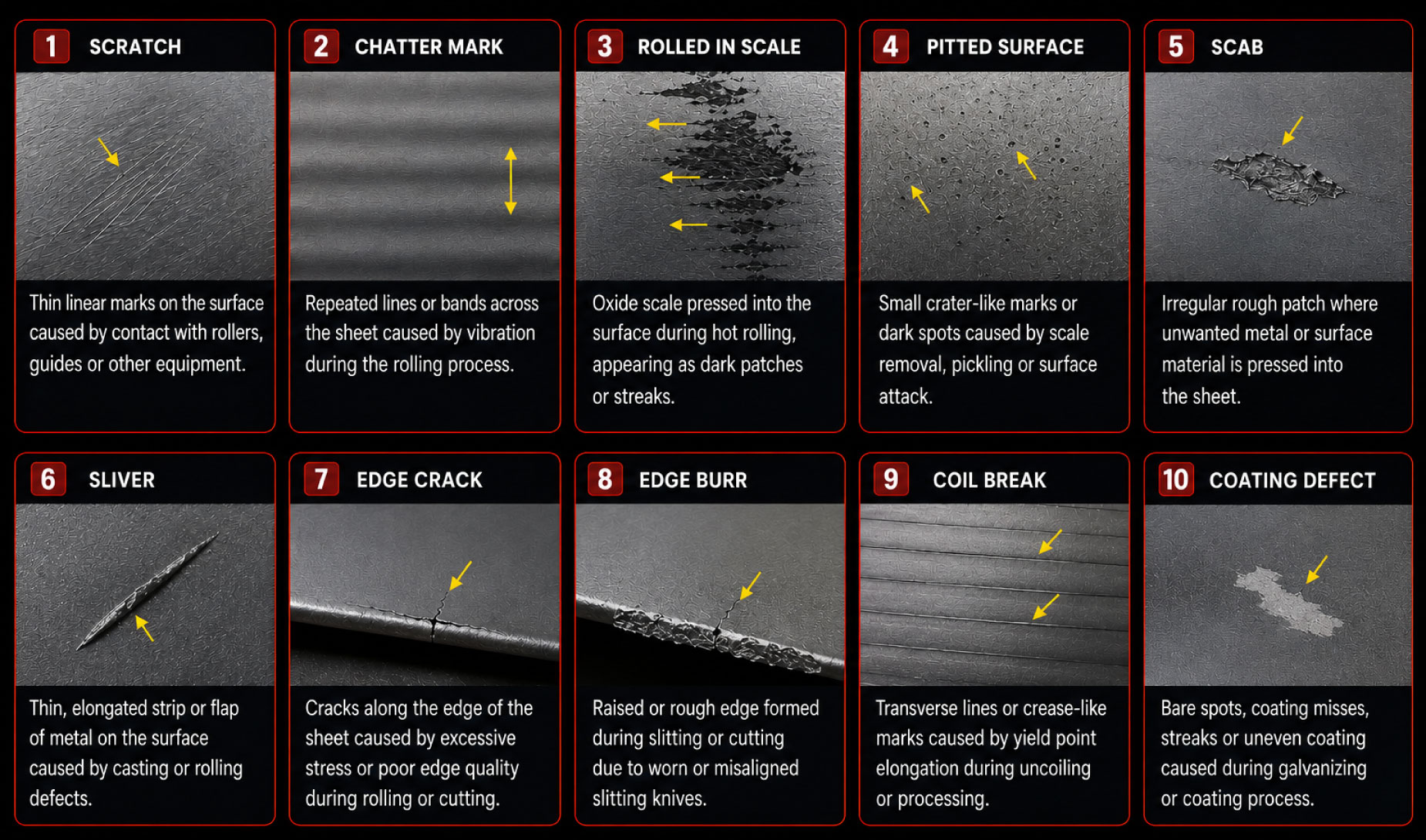
- Scratches: Scratches appear as long, narrow marks caused by contact with rollers, guides, or handling equipment. They can reduce surface finish quality and affect downstream coating performance.
- Chatter Marks: Chatter marks appear as repeated bands caused by vibration during rolling. On plain steel sheets, they indicate manufacturing instability. For textured or embossed products, inspection systems use product-specific inspection recipes to distinguish intentional surface patterns from manufacturing defects.
- Rolled-In Scale: Rolled-in scale occurs when oxide scale remains on the steel surface and becomes embedded during hot rolling. It usually appears as dark patches or irregular streaks.
- Pitted Surface: Pitted surfaces appear as small crater-like depressions that affect appearance, finishing quality, and coating performance.
- Scabs: Scabs are rough, irregular surface patches formed when unwanted material becomes embedded in the steel sheet during manufacturing.
- Slivers: Slivers appear as thin, elongated strips or flakes of metal on the steel surface. If left undetected, they can affect downstream forming and finishing operations.
- Edge Cracks: Edge cracks develop along the sheet edges and may expand during bending, forming, or fabrication.
- Edge Burrs: Edge burrs are raised edges created during slitting or cutting operations. They can affect fabrication quality and operator safety.
- Coil Breaks: Coil breaks appear as transverse crease-like lines, particularly in cold-rolled steel after uncoiling or processing.
- Process Stains: Process stains include oil residue, coolant marks, pickling stains, or rinsing-related surface marks that indicate manufacturing inconsistencies. For galvanized or coated steel, this category may also include visible coating defects.
Why Manufacturers Are Investing in Steel Surface Inspection Systems
Manufacturers are increasingly recognizing that inspection delivers value beyond quality assurance.
A Steel Surface Inspection System continuously monitors production while helping manufacturers improve inspection consistency, reduce manual inspection effort, and identify manufacturing issues earlier.
Inspection data also reveals recurring quality trends across production lines, equipment, materials, and operating shifts. These insights support faster root cause analysis, improve production planning, and enable long-term process optimization.
Instead of simply identifying defective products, manufacturers gain actionable manufacturing intelligence that supports operational excellence.
What Manufacturers Should Consider Before Deployment
Successful steel sheet defect detection requires more than installing cameras above a production line.
Manufacturers should validate inspection requirements based on sheet width, camera coverage, lighting configuration, production speed, target defect size, product variation, and quality standards before deployment.
Reflective surfaces, varying steel finishes, and different manufacturing requirements require production-specific inspection strategies. Validating the inspection system under actual operating conditions helps maintain consistent performance while reducing unnecessary false detections.
A production-focused deployment approach enables manufacturers to build a reliable inspection process that scales with changing production requirements.
Business Value Beyond Defect Detection
Steel sheet inspection has become an important contributor to manufacturing performance.
Continuous inspection helps manufacturers reduce scrap, improve first-pass yield, strengthen production consistency, minimize quality escapes, and reduce customer complaints. At the same time, inspection insights provide greater visibility into recurring process issues, enabling faster corrective actions and continuous operational improvement.
By combining quality inspection with operational intelligence, manufacturers can improve both production performance and long-term manufacturing resilience.
Conclusion
Steel sheet defect detection is evolving into a strategic manufacturing capability rather than remaining a standalone quality control activity.
By combining Industrial Visual Operations AI with continuous visual inspection, manufacturers can strengthen quality assurance, improve production visibility, detect manufacturing defects earlier, and generate operational insights that support continuous improvement.
As manufacturing operations continue to modernize, continuous steel sheet inspection will play an increasingly important role in improving quality consistency, operational efficiency, and overall manufacturing excellence.
Contact us to explore how Industrial Visual Operations AI can help you detect manufacturing defects earlier, reduce quality escapes, and improve production performance.
Post Tags :
- Automated Visual Inspection
- Factory Automation
- Industrial Inspection
- Industrial Visual Intelligence
- Manufacturing Intelligence
- Manufacturing Quality Inspection
- Operational Excellence
- Production Quality
- Production Visibility
- Quality Assurance
- Smart Manufacturing
- Steel Manufacturing
- Surface Quality Control
- Visual Inspection Automation