

Why Package Counting with Vision AI Is Becoming a Priority in Warehouse Operations
Generate a quick summary


Warehouse accuracy is assessed through system reports and periodic audits. However, the root cause of most discrepancies lies at the dock, where loading and unloading activities translate physical movement into system records. Package Counting with Vision AI addresses this gap by enabling real-time verification at the point of movement.
Industry benchmarks indicate that many warehouse operations maintain approximately 95% inventory accuracy . While this appears acceptable, even a small deviation at scale creates significant operational impact.
For example, in a large facility managing tens of thousands of SKUs, a 5% inaccuracy rate can translate into thousands of incorrect records at any given time. These discrepancies do not originate in reporting systems. They originate during execution, particularly at the point of loading and unloading.
What is Package Counting with Vision AI
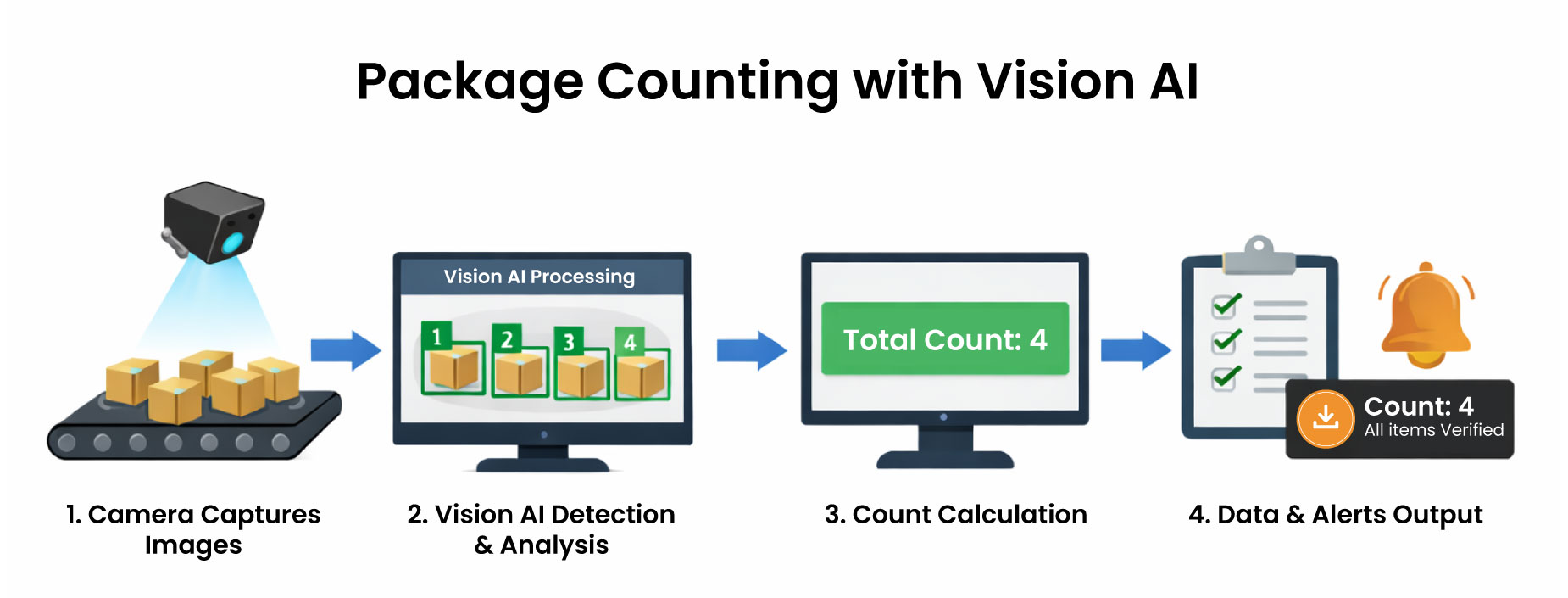
Package Counting with Vision AI uses cameras and Computer Vision models to count packages in real time during loading and unloading operations.
Unlike barcode systems or manual checks, it does not depend on labels, scanning behavior, or operator consistency.
It directly tracks physical movement.
That makes it relevant for
- High-volume warehouses
- 3PL operations
- Retail distribution centers
- Multi-dock facilities
This is not automation for efficiency. It is operational control at the point of execution.
Why Traditional Counting Methods Break at the Dock
This is not a technology gap. It is a process limitation.
Dock teams are measured on turnaround time, not verification accuracy.
What actually happens on the floor
- Manual counting varies across shifts and operators
- Barcode scans fail due to label damage or poor positioning
- Packages overlap, move quickly, and don’t follow fixed sequences
Even a small failure rate creates scale problems.
A 1 percent miss rate in a high-throughput dock can generate hundreds of daily exceptions. That translates into manual intervention, delays, and rework.
At that point, counting is no longer a control mechanism. It becomes an estimate.
What is the Business Risk of Inaccurate Package Counting
This is not just a warehouse issue. It directly impacts revenue, cost, and customer experience.
Counting errors lead to
- Mismatch between physical and system inventory
- Shipment inaccuracies and customer complaints
- Increased reconciliation effort
- Billing disputes with suppliers and carriers
These issues don’t appear as a single failure. They show up as recurring inefficiencies across operations.
Over time, those inefficiencies compound into lost revenue, reduced trust, and higher operating cost.
How Package Counting using Computer Vision Changes the Model
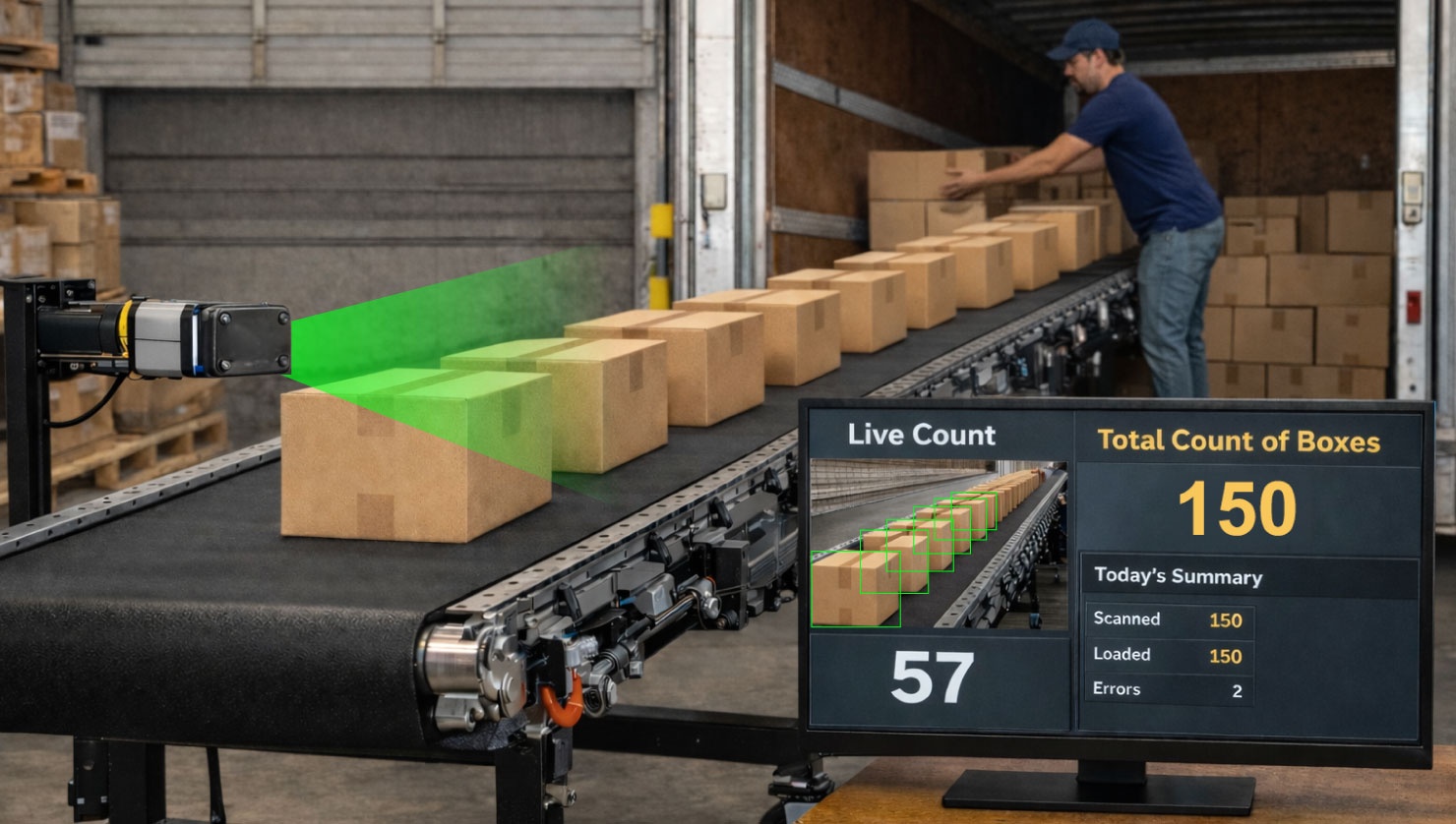
Package Counting Using Computer Vision removes dependency on human input and scan events.
With Automated Counting with Computer Vision, cameras monitor dock doors and count every package as it moves through loading and unloading.
What changes immediately
- No need to scan every package
- No reliance on barcode readability
- No interruption to operations
Counting becomes part of the workflow, not a separate step.
This shifts operations from validating after movement to validating during movement.
What Changes with Box Counting using Vision AI
Box Counting using Vision AI delivers measurable operational impact
- Real-time accuracy at execution: Errors are identified before shipments leave the dock
- Reduced revenue leakage: Fewer short shipments and inventory mismatches
- Lower cost to serve: Less manual reconciliation and exception handling
- Stronger auditability: Every movement is backed by visual evidence
- Faster dispute resolution: Clear records reduce time spent on claims
- Scalable throughput: Higher volume without increasing dependence on manual counting
This is how Warehouse Package Counting shifts from reactive correction to controlled execution.
Where Vision AI Improves Package Counting in Warehouse Operations
The impact of Vision AI is most visible in critical warehouse workflows.
- Inbound operations: Validate received quantities before inventory is recorded
- Outbound operations: Ensure shipment accuracy before dispatch
- Multi-dock environments: Monitor all dock doors with centralized visibility
- Dispute management: Resolve supplier and carrier issues using recorded evidence
This addresses current operational gaps without changing existing workflows.
When to Consider Package Counting with Vision AI
This becomes relevant when
- Manual counting creates recurring discrepancies
- Barcode failures slow down operations
- Shipment errors impact delivery performance
- Increasing volume increases dependence on labor
If these conditions exist, the cost is already reflected in operations and financial performance.
Conclusion
Most warehouses try to improve accuracy by adding more checks. That increases cost but does not prevent errors.
Package Counting with Vision AI addresses the issue at the source by validating movement in real time during loading and unloading.
It enables accurate counting without slowing operations and reduces dependency on manual processes.
If counting still depends on manual or barcode-based validation, the operation is already carrying avoidable risk.
The decision is whether to continue managing that risk or eliminate it at the dock.
To improve accuracy at the dock and reduce discrepancies during loading and unloading, explore how Package Counting with Vision AI can be deployed in your warehouse operations.