
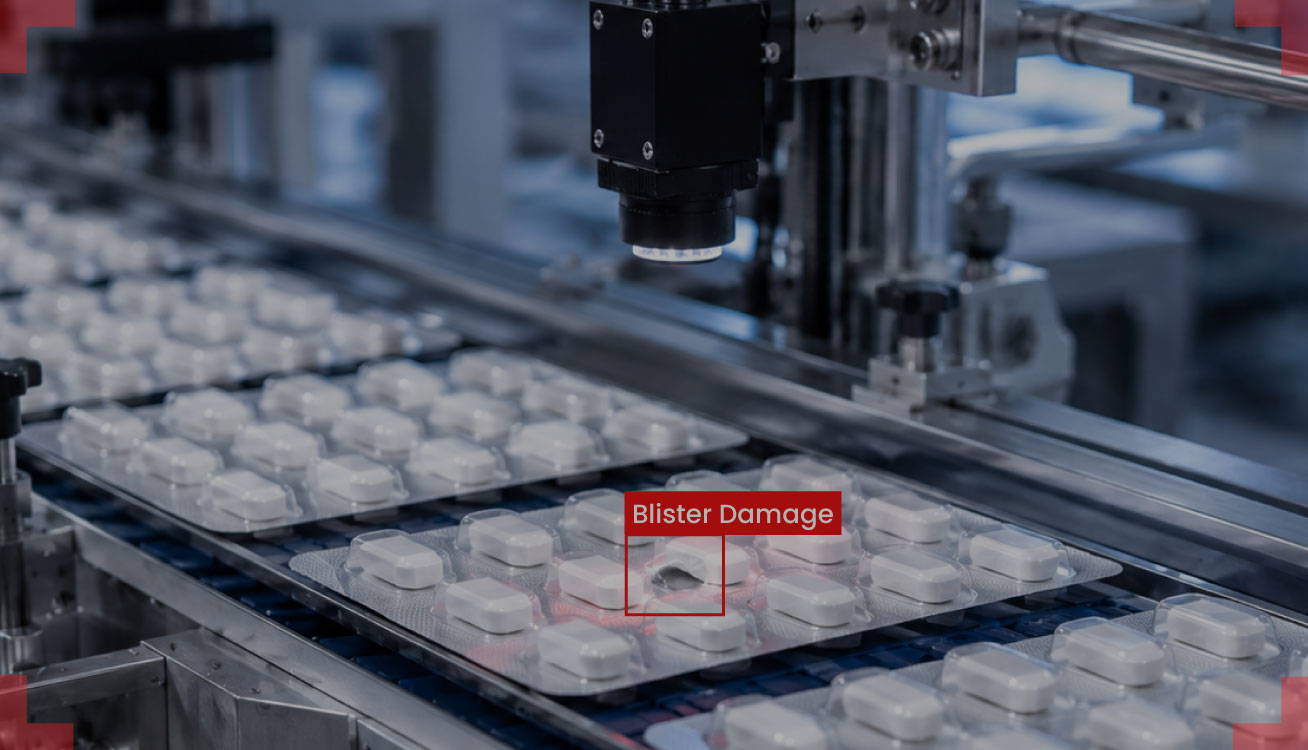
Blister Pack Inspection with Vision AI for Pharma Packaging Defect Detection
Generate a quick summary


Blister packaging is one of the final quality checkpoints before a pharmaceutical product moves to secondary packaging, distribution, or release review. At this stage, every blister pack must confirm that the product is complete, protected, readable, and ready for the next step.
A good blister pack is not only about tablet presence. It also depends on tablet condition, cavity integrity, seal quality, foil protection, code readability, and visible cleanliness. Missed defects can lead to rejected packs, delayed batches, investigations, packaging waste, and customer complaints.
Blister Pack Inspection with Vision AI helps pharmaceutical manufacturers strengthen this checkpoint. Using industrial cameras, controlled lighting, Computer Vision, and AI based inspection models, manufacturers can detect visible defects in real time, capture inspection evidence, and track recurring quality issues across lines, shifts, and product formats.
Why Manual Blister Pack Inspection Has Limits
Manual inspection remains important, but blister lines are difficult to inspect consistently at production speed. Reflective foil, transparent cavities, curved surfaces, and product variation can make small defects harder to see.
Some defects, such as missing tablets or torn foil, are visible right away. Others, such as fine cracks, pinholes, weak seals, foreign particles, cloudy cavities, or poor code printing, can be missed when lighting, speed, or inspector fatigue changes.
Vision AI adds a consistent inspection layer to the packaging line. It checks packs against defined defect criteria and creates clearer data for review, follow up, and process improvement.
How Blister Pack Inspection Using Vision AI Works
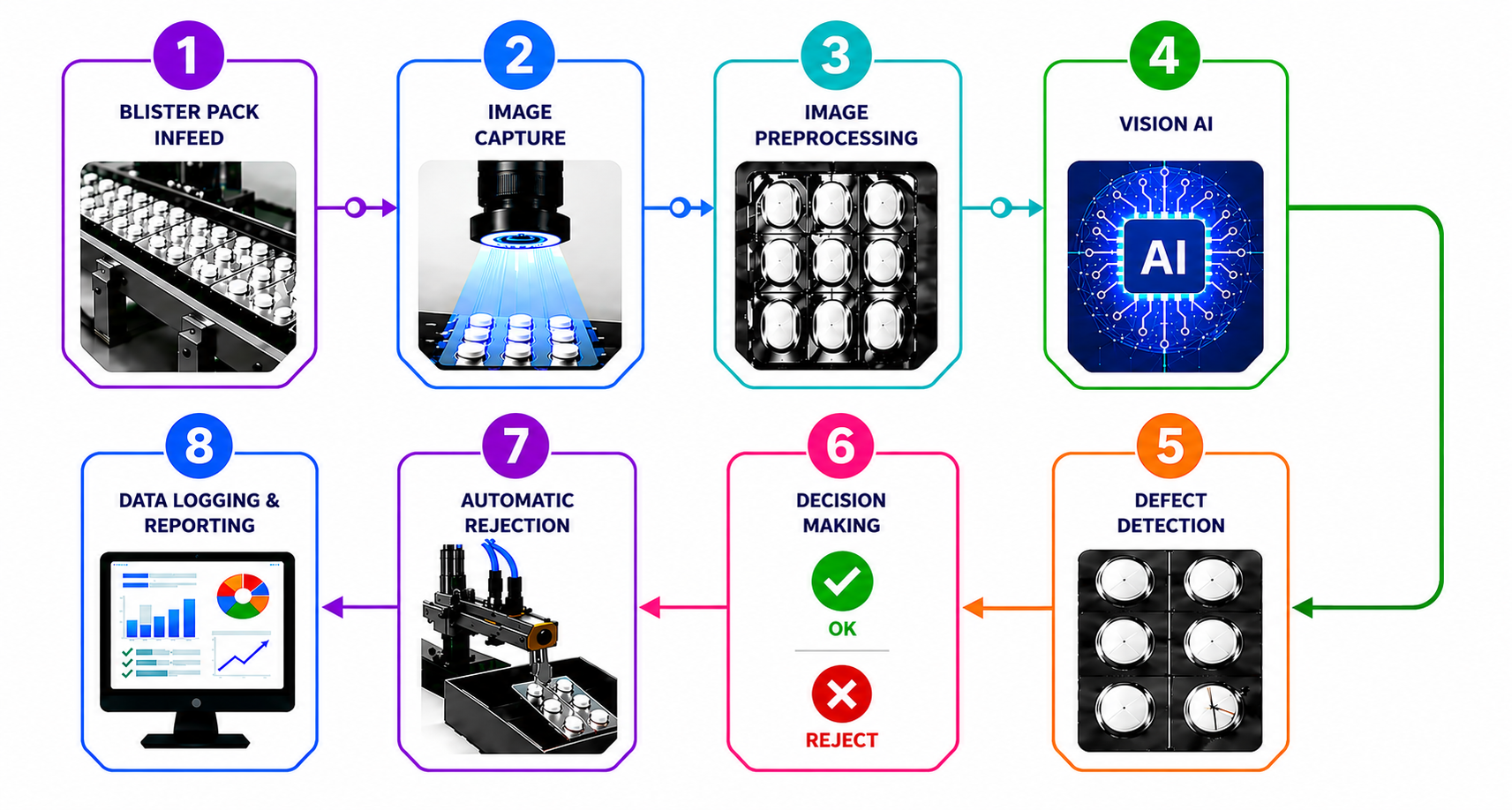
Blister pack quality inspection with Computer Vision combines cameras, lighting, and AI based image analysis to inspect packs as they move through the line.
1. High Resolution Image Capture
Cameras capture detailed images of tablets, capsules, cavities, foil, seal areas, and printed information. The setup can inspect the product side, foil side, print zone, barcode area, seal area, or multiple inspection points.
Controlled lighting improves image clarity because reflective foil, transparent plastic, curved cavities, and coated tablets can create glare or low contrast.
2. Deep Learning Based Defect Detection
The Vision AI model analyzes captured images to detect defined product and packaging defects. These may include missing tablets, broken tablets, wrong tablets, empty pockets, poor sealing, foil tears, pinholes, cavity damage, foreign particles, cloudy blisters, and print or code defects.
The system can classify defects by type instead of only marking packs as good or bad. This helps teams understand what failed, where it happened, and whether the issue is repeating.
3. Real Time Rejection
When a defect is detected, the system can send a signal to the reject mechanism based on site rules. Depending on the line setup, a defective cavity may lead to rejection of the full strip, card, or pack.
This prevents defective packs from moving downstream and gives operators faster visibility into line issues.
4. Inspection Evidence and Reporting
Vision AI systems can record inspection images, defect types, timestamps, batch details, reject counts, and inspection results. This supports batch review, quality checks, maintenance follow up, operator feedback, and process improvement when the system is properly implemented and validated.
Key Blister Pack Defects Vision AI Can Detect
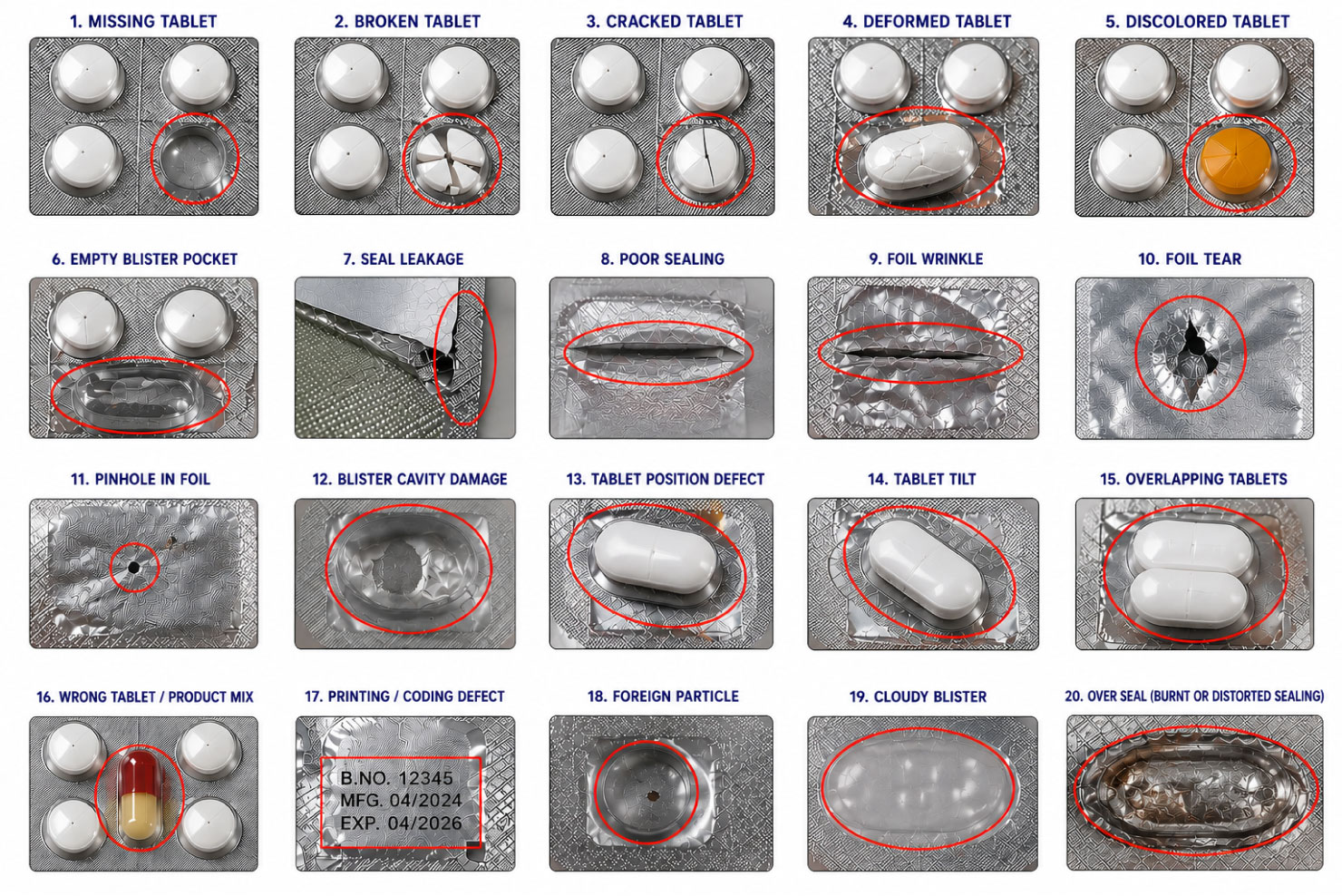
A Blister Pack Defect Detection with Vision AI system can be trained to detect visible product and packaging defects, including the following.
- Missing Tablet: Detects cavities where the tablet or capsule is absent.
- Empty Blister Pocket: Identifies formed pockets without the required product.
- Broken Tablet: Flags tablets that appear broken, split, or incomplete.
- Cracked Tablet: Detects visible cracks on tablet surfaces.
- Chipped or Deformed Tablet: Identifies crushed, chipped, misshaped, or damaged tablets.
- Discolored Tablet: Detects color variation against the approved appearance.
- Wrong Tablet or Product Mix: Flags tablets that differ by color, shape, size, imprint, or surface appearance.
- Tablet Position Defect: Detects tablets that are shifted or off center.
- Tablet Tilt: Identifies tablets that are angled, raised, or not lying flat.
- Overlapping Tablets: Detects multiple tablets in the same cavity.
- Seal Leakage: Flags visible signs of compromised pack protection.
- Poor Sealing: Detects incomplete, uneven, burnt, or irregular seals.
- Foil Wrinkle: Identifies wrinkles or folds in the foil surface.
- Foil Tear: Detects torn or damaged foil areas.
- Pinhole in Foil: Flags small holes or punctures with the right imaging setup.
- Blister Cavity Damage: Detects cracked, dented, crushed, or malformed cavities.
- Cloudy Blister: Identifies unclear blister areas that reduce product visibility.
- Foreign Particle: Detects visible unwanted material inside cavities or on pack surfaces.
- Printing or Coding Defect: Checks batch numbers, expiry dates, barcodes, product codes, and serialization details.
- Over Seal or Burnt Sealing: Detects excessive sealing, heat marks, or distorted seal zones.
What to Consider Before Implementation
Teams should define the inspection scope, defect criteria, pack formats, pass fail rules, and evidence requirements before implementation.
Camera resolution, lens selection, lighting angle, trigger timing, and pack presentation affect inspection performance. AI models also need strong image data, including good packs, borderline packs, normal variation, and real production defects.
False rejects and false accepts must be controlled through testing and validation. Too many false rejects create waste. Too many false accepts create quality risk. Human oversight, clear dashboards, documented procedures, and trained teams should remain part of the workflow.
Conclusion
Tablet/Pill Inspection with Vision AI helps manufacturers detect visible defects earlier, reduce manual inspection dependency, and turn inspection results into useful production data.
With the right camera setup, lighting, model training, and quality workflow, Vision AI can support stronger blister pack quality control across high speed pharma packaging lines. Contact Now to Improve Pharma Packaging Quality Control